
Standard Shower Arm Height & Ceiling Drop (2027 Guide): Ideal Clearance for Rain Shower Heads

The ideal spray face elevation for rain shower heads is 84 to 88 inches (213 to 224 cm) Above Finished Floor (AFF), providing an optimal overhead clearance of 8 to 12 inches (20 to 30 cm) above the tallest user’s scalp. Ceiling drop length is calculated by subtracting 86 inches plus fixture thickness from finished ceiling height: an 8-ft ceiling requires a 4" to 6" drop, while a 9-ft ceiling requires a 12" to 16" drop.
Quick Reference: Shower Arm Height & Ceiling Drop Sizing Chart
Refer to this technical reference matrix before framing or ordering shower fixture rough-ins:
| Configuration Setup | Plumbing Rough-In (AFF) | Finished Spray Face (AFF) | Head Clearance | Recommended Hardware |
|---|---|---|---|---|
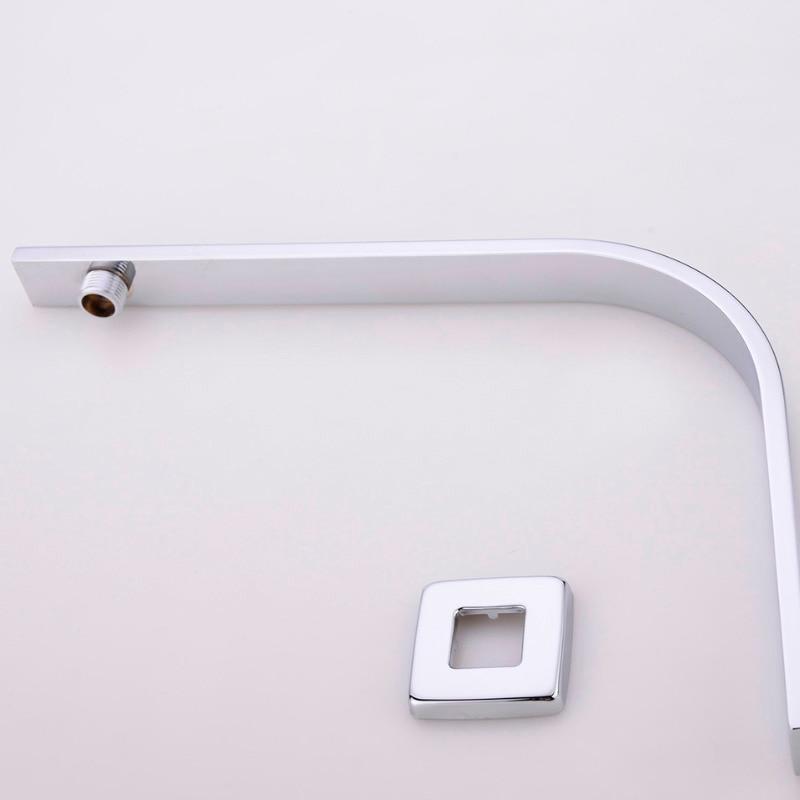
| Standard Angled Wall Arm | 80" (203 cm) | 74" – 78" (188 – 198 cm) | 3" – 6" (7 – 15 cm) | 6" – 8" standard angled arm |
| Wall Rain Head (Straight Arm) | 84" – 90" (213 – 229 cm) | 82" – 86" (208 – 218 cm) | 6" – 10" (15 – 25 cm) | 16" – 18" straight horizontal arm |
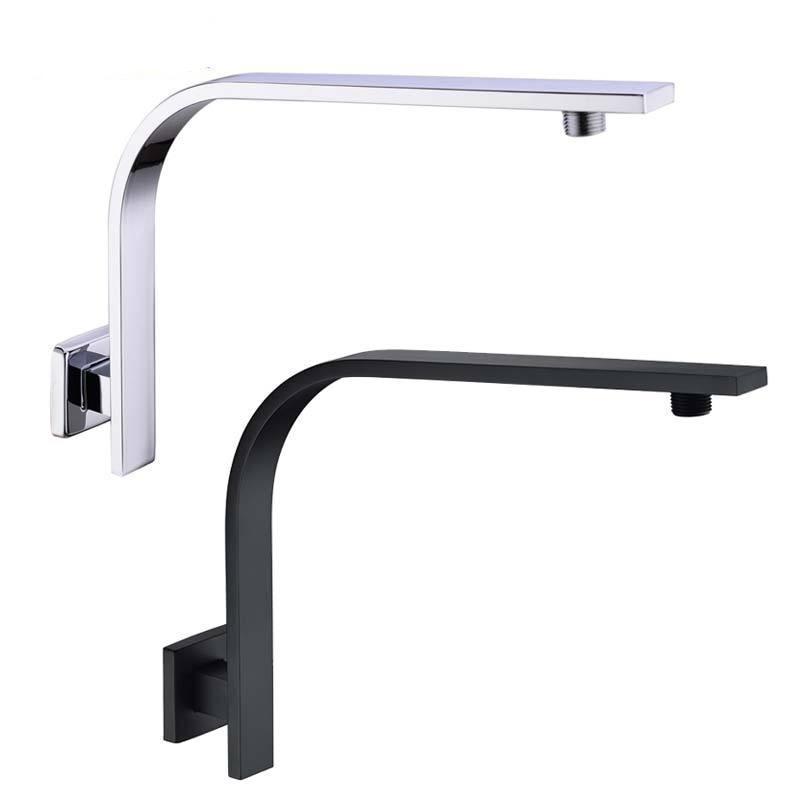
| Retrofit Wall Rain Head | 78" – 80" (198 – 203 cm) | 84" – 88" (213 – 224 cm) | 8" – 12" (20 – 30 cm) | high-rise gooseneck shower arm |
| 8-Foot (96") Ceiling Drop | Ceiling drop-ear elbow | 84" – 86" (213 – 218 cm) | 8" – 10" (20 – 25 cm) | ceiling drop shower arm (4"–6") |
| 9-Foot (108") Ceiling Drop | Ceiling drop-ear elbow | 86" – 88" (218 – 224 cm) | 8" – 12" (20 – 30 cm) | 12" – 16" heavy-gauge ceiling rod |
| 10-Foot (120") Ceiling Drop | Ceiling drop-ear elbow | 86" – 90" (218 – 229 cm) | 8" – 12" (20 – 30 cm) | 24" – 30" braced drop pipe or flush cassette |
1. Rough-In Height vs. Finished Spray Face: Avoid the "Contractor Gap"
The most common installation mistake in luxury bathrooms stems from treating the rough-in brass elbow as the final height of the shower head.
A modern rainfall shower system hangs vertically downward from an arm or ceiling drop via a brass swivel ball joint. This assembly adds 3 to 5 inches of downward profile. If a plumber sets a rough-in elbow at the traditional 80-inch mark, a downward-facing rain head will sit at roughly 75 inches—too low for anyone approaching six feet tall.
⚠️ Always Calculate AFF (Above Finished Floor): Rough plumbing occurs during framing. Mortar beds, slope pans, and heavy porcelain tiles add 1.5 to 2.5 inches to the finished surface. Plumbers must measure their rough-in from the future finished tile line, not the bare plywood subfloor.
2. The Golden Rule of Rain Head Clearance: Thermal Dissipation & Velocity
Unlike conventional high-pressure wall nozzles that spray diagonally, rain shower heads deliver a vertical, gravity-fed column of water. Preserving the tactile experience requires precise height balancing:
- The 8-to-12-Inch Sweet Spot: Positioning the spray plate 8 to 12 inches above the tallest bather’s scalp ensures droplets form a cohesive, comforting drape without excessive splashing.
- The Drawbacks of Hanging Too Low (< 6 inches): If clearance is under 6 inches, washing hair becomes awkward, and the bather loses the spacious sensation of standing under an open sky.
- The Drawbacks of Hanging Too High (> 18 inches): When rain droplets drop more than 18 inches through ambient bathroom air, they undergo rapid thermal dissipation—cooling by up to 2°F to 3°F before touching the skin. Excess free-fall also causes droplet scatter, wetting glass walls and losing gentle droplet mass.
3. The Exact Mathematical Formula for Ceiling Drop Sizing
Use this straightforward sizing formula to choose the exact drop rod length for any ceiling height:
Example: For a 9-foot ceiling (108" AFF), targeting an 86" spray face with a 3.5" shower head depth: 108" - 86" - 3.5" = 18.5" (Select an 18-inch ceiling drop rod).
4. Horizontal Wall Projection: The Overlooked Metric
If you choose a wall-mounted setup rather than ceiling plumbing, vertical height is only half the calculation. Because rain shower nozzles point vertically downward, an arm with insufficient projection forces the bather uncomfortably close to the wet wall tile.
- 8-inch to 10-inch Rain Heads: Require a minimum 14-inch to 16-inch horizontal shower arm.
- 12-inch to 16-inch Rain Heads: Require an 18-inch to 20-inch horizontal shower arm to ensure full elbow clearance away from the mixer trim.
5. Water Flow, Structural Blocking & Fixture Weight
Solid brass ceiling arms and wide rainfall plates filled with water can exert significant continuous torque on plumbing joints.
- Mandatory Wood Blocking: Instruct your framing team to anchor a solid 2x4 or 2x6 wood block between studs or joists directly behind the drop-ear elbow. This prevents flex that can crack grout or break watertight seals.
- Balanced Pressure Control: High-coverage rain shower fixtures perform best when paired with an advanced thermostatic shower valve, which prevents sudden scalding or pressure drops when other household appliances run.
- Finish Integrity: For specialty finishes such as luxury antique brass fixtures, avoid harsh chemical cleaners during installation; use only clean water and non-abrasive microfibers.